Best 10+ Temples in Bangkok You Must Visit in 2026
Bangkok has over 400 temples. That figure is both inspiring and overwhelming. First-time visitors often arrive with a rough list (the Grand Palace, Wat Arun, probably Wat Pho) and leave wishing they had gone further.
Seasoned travellers come back specifically for the ones they missed: the turtle-pond temple south of the Memorial Bridge, the iron monastery nobody talks about, the solid gold Buddha hidden under plaster in Chinatown for a century.
This guide covers the 10+ best Bangkok temples worth your time in 2026, with addresses, opening hours, admission costs, and the best moment of day to visit each.
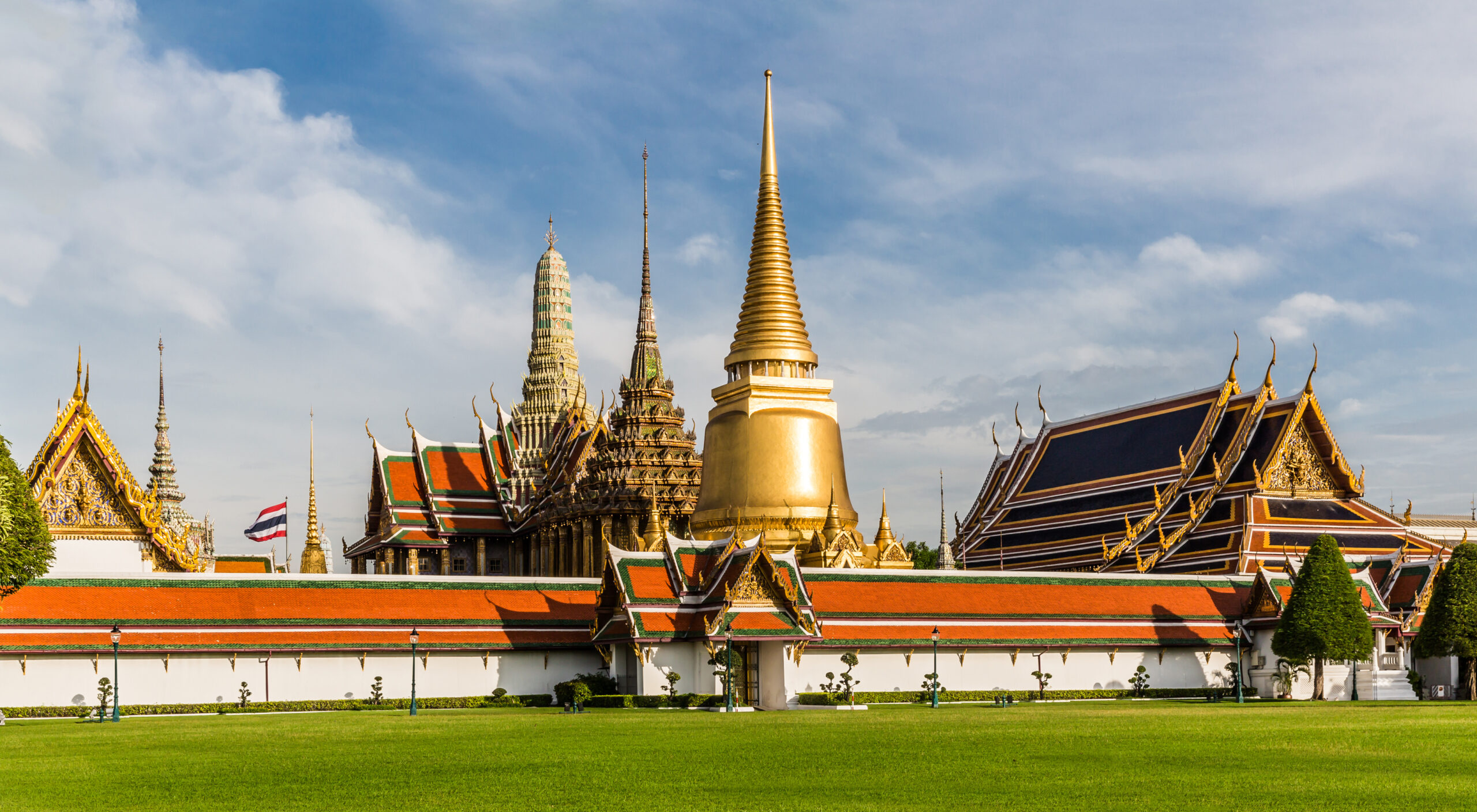
1. Wat Phra Kaew and The Grand Palace
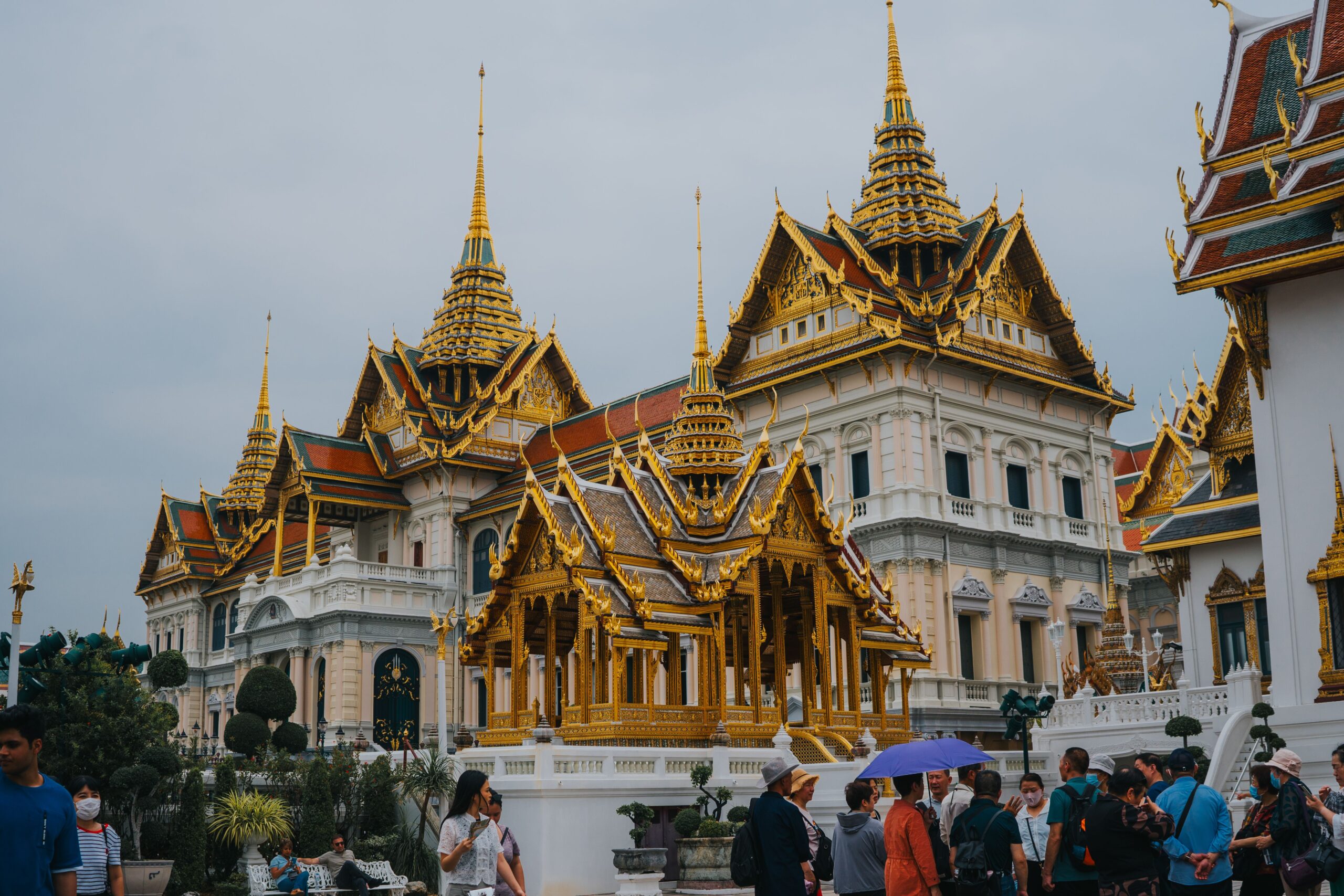
Thailand’s most sacred religious site sits within the Grand Palace complex on Rattanakosin Island. Wat Phra Kaew houses the Emerald Buddha, a 66-centimetre image carved from a single piece of jade, believed to protect the Thai nation and seasonally dressed in gold robes by the King.
The palace grounds around it cover more than 218,000 sqm of gilded pavilions, towering guardian figures, and a 2-kilometre gallery of Ramakien murals.
The Grand Palace enforces the strictest dress code in Bangkok: full-length sleeves and trousers or a skirt are required. Sarong wraps are not accepted at the gate, though they can be purchased nearby.
- Address: Na Phra Lan Road, Phra Nakhon District, Bangkok 10200
- Admission: 500 THB.
- Open: 8:30am to 3:30pm daily.
- Best time: Arrive at opening before tour groups peak around 10am.
2. Wat Pho: Temple of the Reclining Buddha
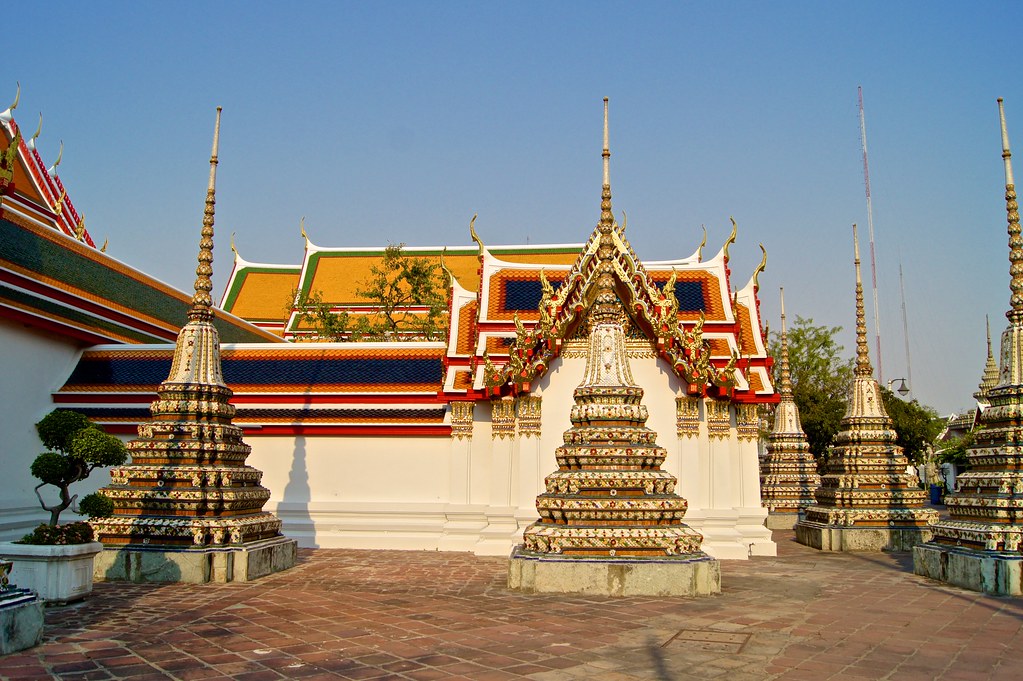
Bangkok’s oldest and largest temple complex is home to the Reclining Buddha, 46 metres long and 15 metres high, with mother-of-pearl inlay covering the soles of its feet in 108 auspicious symbols. The scale registers only when you are standing beside the figure and can see the tiled floor of the surrounding hall recede into the distance.
Wat Pho also houses over 1,000 Buddha images collected from ancient sites across Thailand, and the Wat Pho Thai Traditional Medical and Massage School operates on-site, offering a 30-minute table massage for around 260 THB.
- Address: 2 Sanam Chai Road, Phra Nakhon District, Bangkok 10200 (a ten-minute walk south of the Grand Palace)
- Admission: 200 THB.
- Open: 8am to 6:30pm daily.
- Best time: Morning, directly after the Grand Palace.
3. Wat Arun: Temple of Dawn
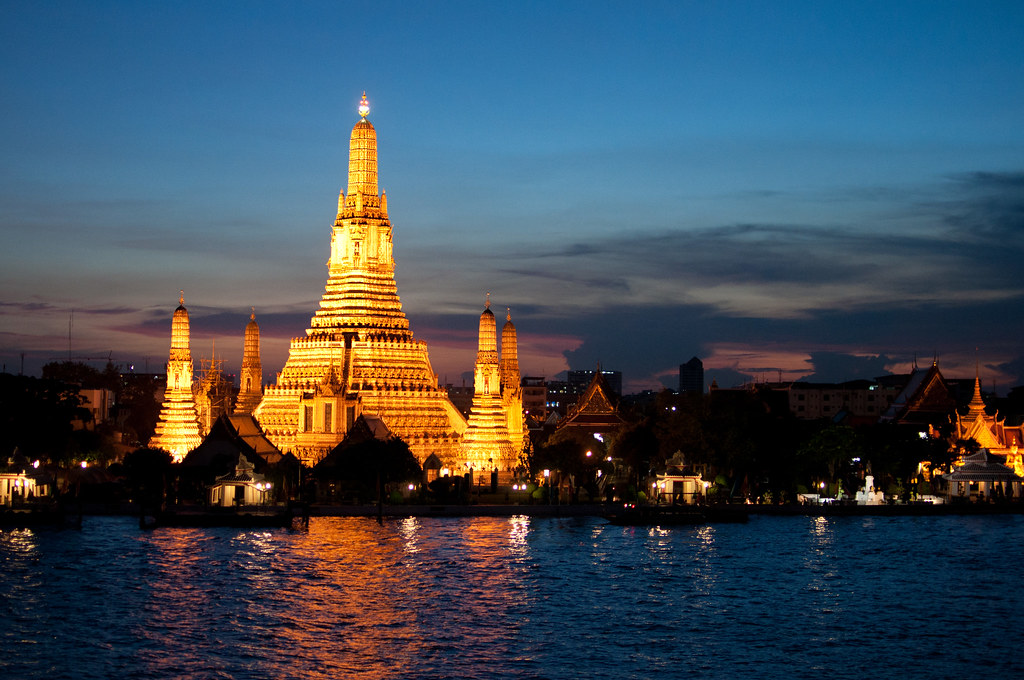
Despite its name, Wat Arun is most worth seeing at sunset, when the 79-metre Khmer-style central prang catches the fading light and the porcelain mosaic covering its surface shifts from white to copper. Thousands of fragments of Chinese ceramic ware were pressed into the plaster by Rama III’s artisans, visible close-up in detail that photographs tend to flatten.
Cross from Wat Pho by the passenger ferry at Tha Tien Pier. The crossing takes two minutes and costs 3 to 5 THB. Visitors can climb the steep stairs of the central prang for river views. The descent requires care.
- Address: 158 Wang Doem Road, Bangkok Yai District, Bangkok 10600 (west bank of the Chao Phraya River)
- Admission: 100 THB.
- Open: 8am to 6pm daily.
- Best time: 4:30pm to 6pm.
4. Wat Saket: Temple of the Golden Mount
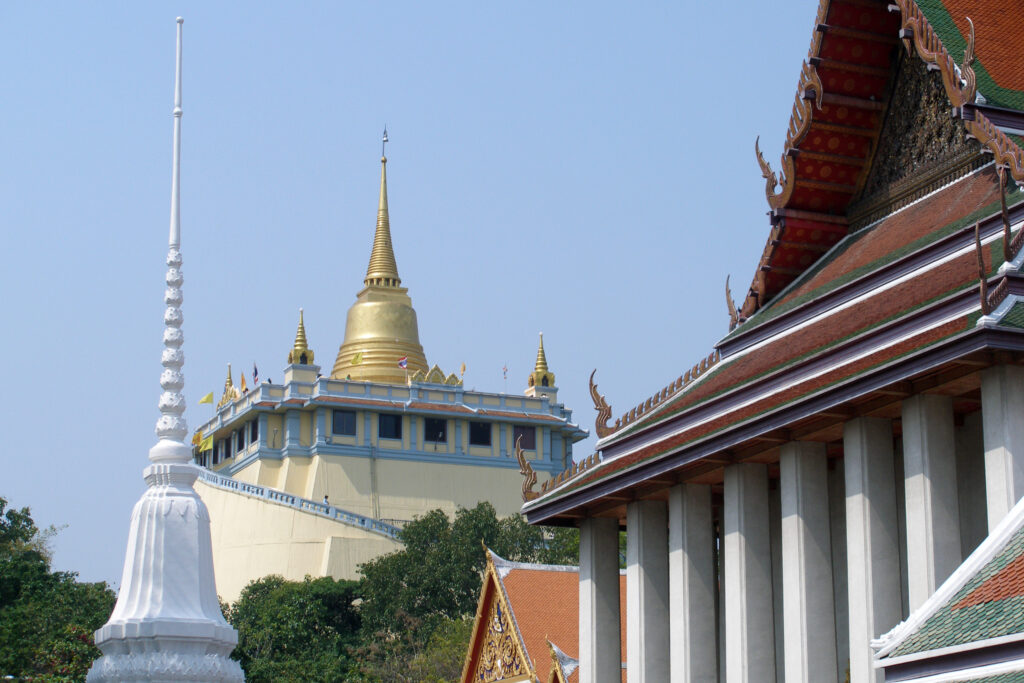
Wat Saket is the only Bangkok temple built on an artificial hill. The 77-metre mound was constructed across the reigns of Rama IV and Rama V from material accumulated over decades in Bangkok’s flood-prone clay soil, and the golden chedi at its summit enshrines Buddha relics brought from India.
Climbing the 344 steps through a planted hillside, small bells hanging in the trees ring at each landing. From the top, the view takes in Old Bangkok rooflines, the Grand Palace, and the Rama VI Bridge beyond. Each November at Loy Krathong, devotees ascend to wrap the chedi in red cloth.
- Address: 344 Chakkraphatdi Phong Road, Pom Prap Sattru Phai District, Bangkok 10100
- Admission: 50 THB.
- Open: 9am to 5pm daily.
- Best time: Late afternoon for panoramic city light.
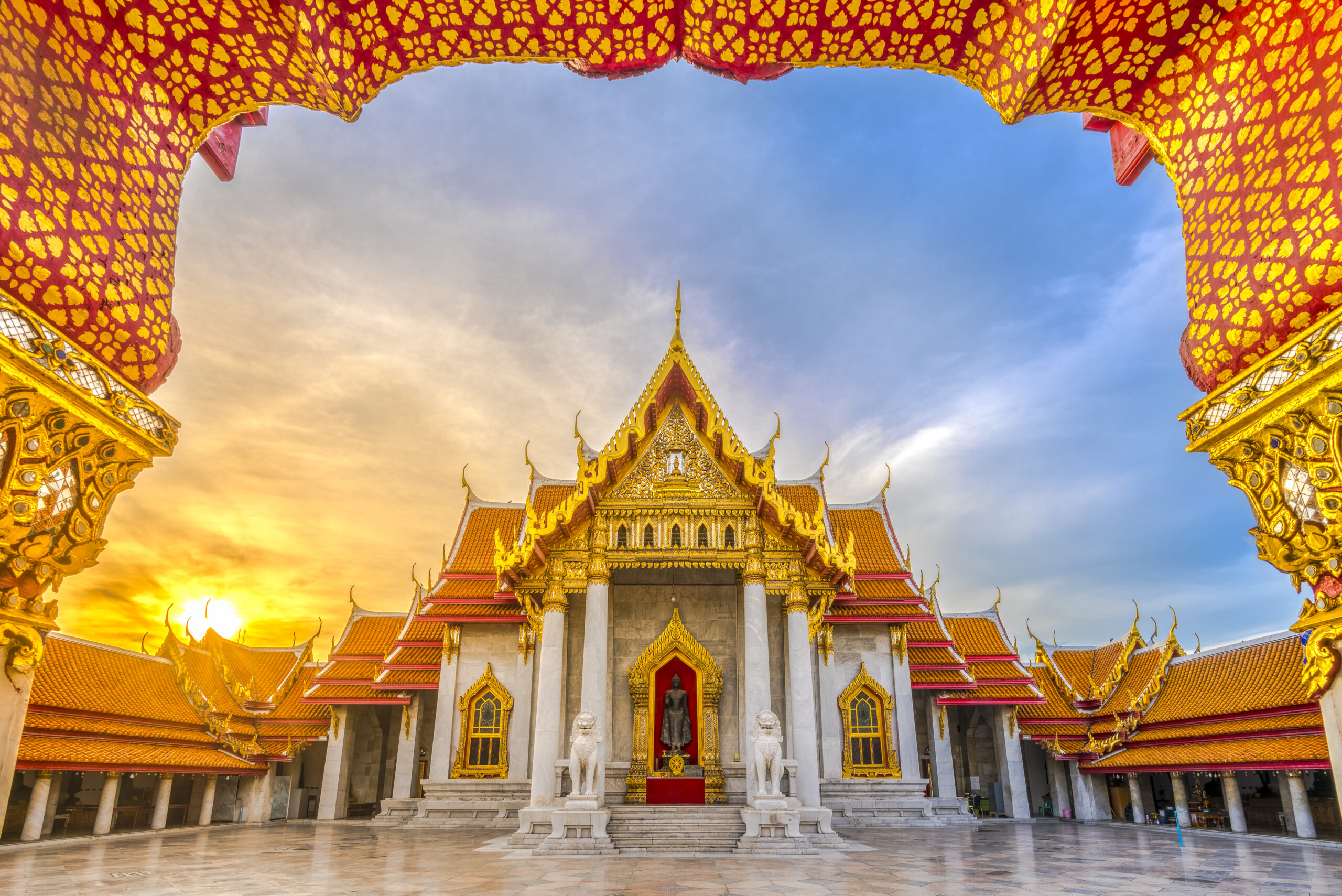
5. Wat Benchamabophit: The Marble Temple
Completed in 1911, Wat Benchamabophit is the only Bangkok temple built entirely of imported Italian Carrara marble, giving its exterior a cool luminosity unlike any other structure in the city. It was designed by Prince Narisara Nuwattiwong, Rama V’s architect half-brother, who fused Rattanakosin geometry with Italian Renaissance structural lines.
The interior gallery holds 52 Buddha images representing styles from across Thailand and neighbouring countries, effectively a survey of Southeast Asian Buddhist art in one cloister. Quieter than the Rattanakosin temples and best reached by taxi from the Democracy Monument area.
- Address: 69 Rama V Road, Dusit District, Bangkok 10300
- Admission: 20 THB.
- Open: 7am to 6pm daily.
- Best time: Morning, when the marble reflects the softest light.
6. Wat Traimit: Temple of the Golden Buddha
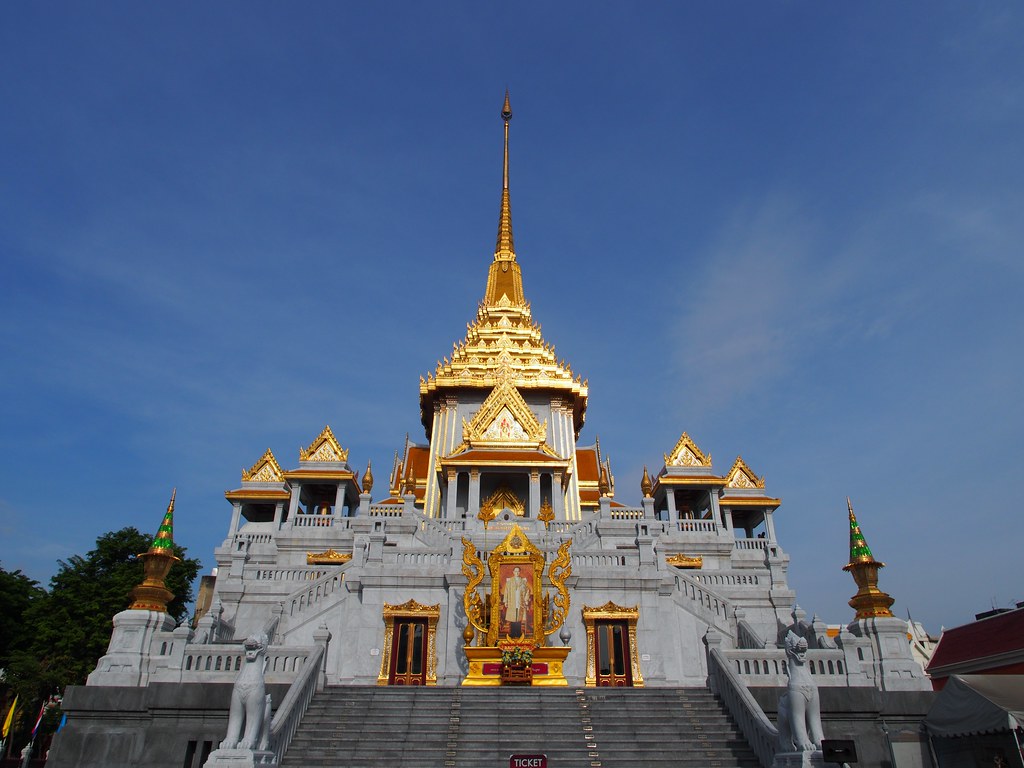
The 3-metre, 5.5-tonne solid gold Buddha inside Wat Traimit was concealed beneath a plaster coating for centuries, most likely to protect it during periods of conflict. The plaster cracked during a construction move in 1953, revealing the gold beneath.
The image is now displayed on the fourth floor of a purpose-built building within the compound. Lower floors contain a museum covering the discovery story and the history of Bangkok’s Chinese community. The temple sits within easy walking distance of Yaowarat Road and pairs well with a Chinatown food walk.
- Address: 661 Charoen Krung Road, Samphanthawong District, Bangkok 10100 (near Odeon Circle, Chinatown)
- Admission: 40 THB.
- Open: 8am to 5pm daily.
- Best time: Pair with a Chinatown lunch stop.
7. Wat Suthat and The Giant Swing
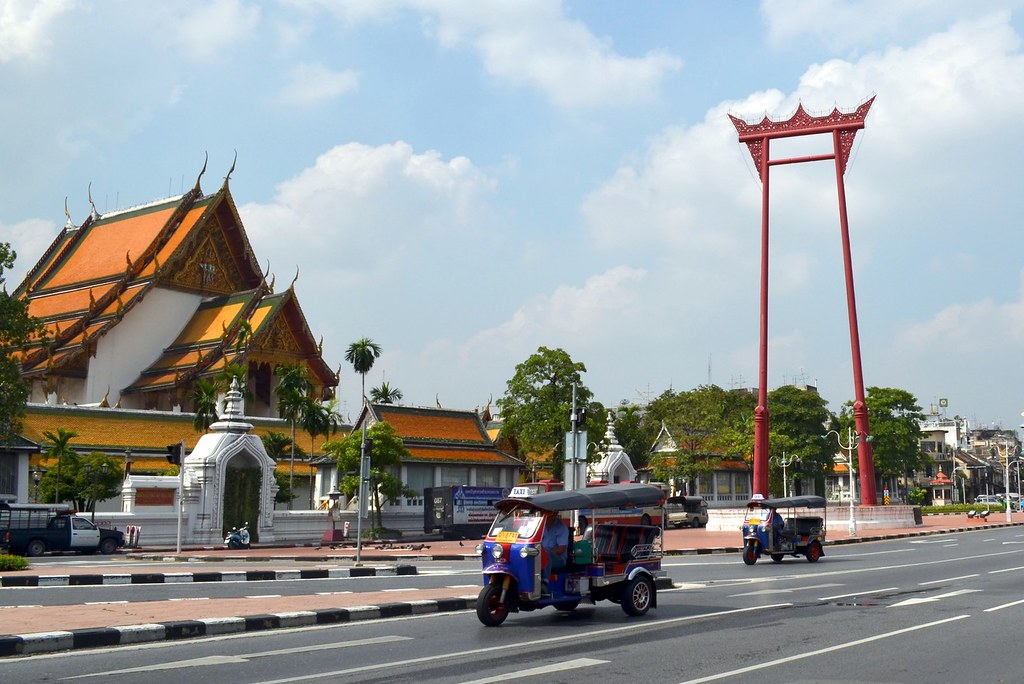
Founded by Rama I and completed under Rama III, Wat Suthat houses mural paintings more than 200 years old that cover the interior walls of the main hall in scenes from the life of the Buddha alongside Thai court subjects.
Outside the compound stands the Giant Swing (Sao Ching Cha), an 80-year-old teak frame once used for a Brahmin ceremony in which participants swung to retrieve a bag of gold coins from a tall pole. The ceremony was discontinued in 1935, but the frame remains one of the most striking open-air compositions in the old city. The temple itself is rarely crowded despite its age and quality.
- Address: 146 Bamrung Mueang Road, Phra Nakhon District, Bangkok 10200 (near Sao Ching Cha / the Giant Swing)
- Admission: 20 THB.
- Open: 8:30am to 9pm daily.
8. Wat Ratchanatdaram: The Iron Monastery
The Loha Prasat (iron monastery) at Wat Ratchanatdaram is the only surviving structure of its kind in the world. The ancient Indian original on which it was modelled no longer exists. Built by Rama III, the white multi-tiered tower stands 35 metres tall with 37 metal spires representing 37 virtues described in Pali Buddhist teaching. In late afternoon, the light through the spires casts long geometric shadows across the courtyard. Entry is free and the site is consistently calm. Combine it with Wat Saket across the road for a complete afternoon in this part of the old city.
- Address: 2 Maha Chai Road, Phra Nakhon District, Bangkok 10200 (across the road from Wat Saket)
- Admission: Free.
- Open: 9am to 5pm daily.
- Best time: 3pm to 5pm.
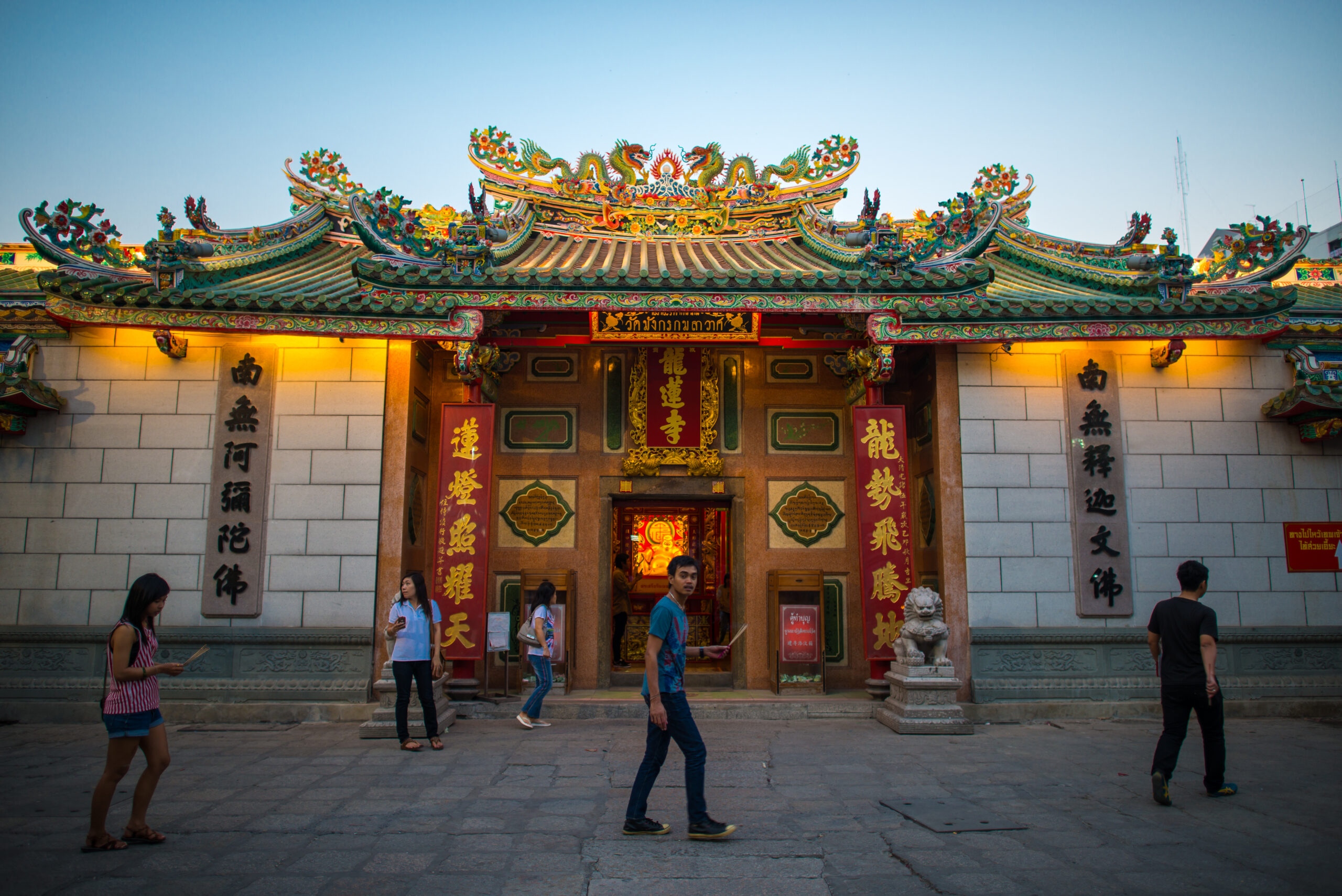
9. Wat Mangkon Kamalawat: Chinatown’s Dragon Temple
The spiritual heart of Bangkok’s Chinese community, Wat Mangkon Kamalawat holds Buddhist, Taoist, and Confucian shrines under a single roof, reflecting the syncretic practice of the Thai-Chinese community. The entrance hall is dense with incense smoke at most hours of the day.
The temple is most atmospheric during Chinese New Year in February and the Vegetarian Festival in October, when ceremonial activity intensifies across the compound. The MRT’s Wat Mangkon Station, opened in 2019, makes it the most accessible of Chinatown’s major religious sites.
- Address: 423 Charoen Krung Road, Samphanthawong District, Bangkok 10100 (MRT: Wat Mangkon Station, Exit 1)
- Admission: Free.
- Open: 6am to 6pm daily.
- Best time: Morning, when ceremony and offering are most active.
10. Wat Prayurawongsawat: The Turtle Pond Temple
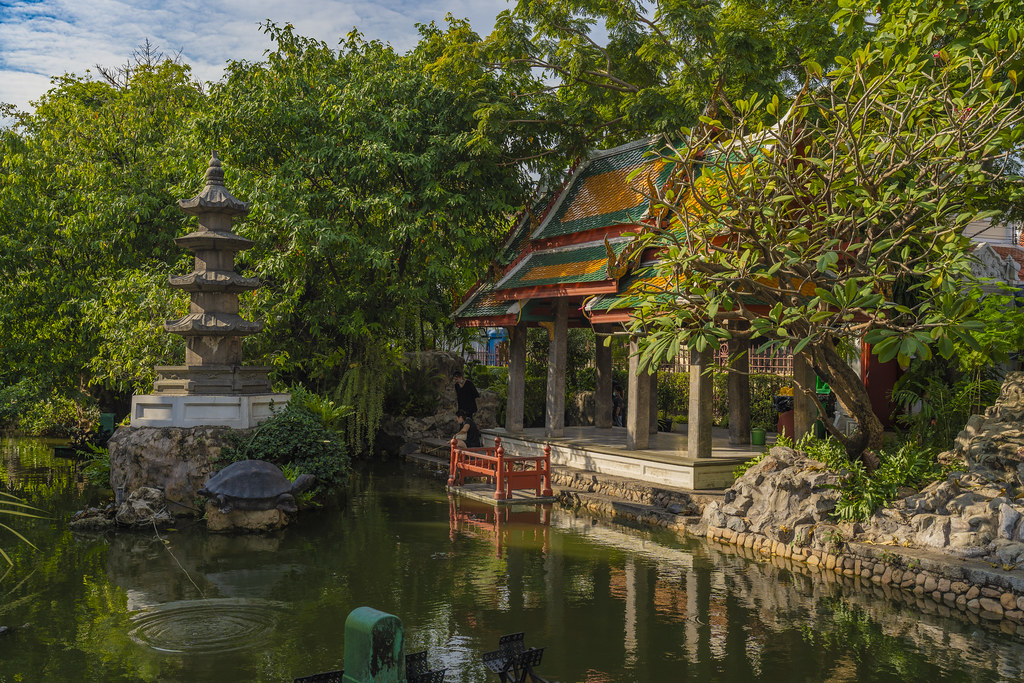
Wat Prayurawongsawat is among Bangkok’s oldest temple complexes and almost entirely off the tourist trail. Rama III commissioned the principal pagoda, Phra Chedi Phuttaphiban, which stands above an irregularly shaped pond containing hundreds of turtles brought by worshippers over generations as merit offerings.
The temple grounds are quiet, the early Rattanakosin architecture is unadorned, and the surrounding Thonburi neighbourhood rewards time spent wandering. The nearby Portuguese Santa Cruz church and Bang Krachao ferry landing make for a logical afternoon circuit in this part of the city.
- Address: 24 Prachathipat Road, Bangkok Yai District, Bangkok 10600 (near Phra Phuttha Yodfa Bridge, also known as the Memorial Bridge)
- Admission: Free.
- Open: Daily.
Bonus: Wat Samphran, The Dragon Temple (Day Trip)
Wat Samphran requires a 45-minute Grab or taxi ride from the city, but the drive is worth making. A green dragon wraps the full exterior of a 17-storey pink tower from base to summit, and visitors can climb through the dragon’s interior to the uppermost level.
The complex is a working Buddhist monastery and is far less visited than Bangkok’s central temples. Combining it with Phra Pathom Chedi in Nakhon Pathom city (the world’s tallest Buddhist monument at 127 metres) creates a full day out.
- Address: 29 Moo 1, Bangtoei, Sam Phran District, Nakhon Pathom 73110 (approximately 50km west of central Bangkok)
- Admission: Free.
- Best time: Weekday morning.
Bangkok Temple Visitor Essentials
A few practical points before you set out can make the difference between a smooth day and being turned away at the gate.
Dress code: Cover your shoulders and knees at every temple. The Grand Palace has the strictest requirement: permanent sleeves and full-length trousers or a skirt are mandatory. Sarong wraps are not accepted there as a substitute.
At most other temples, sarongs can be borrowed or hired at the entrance for around 50 THB. Wear shoes that slip on and off easily, as footwear must be removed before entering most halls.
Admission costs: The Grand Palace costs 500 THB, Wat Pho costs 200 THB, and Wat Arun costs 100 THB for foreign visitors. Most smaller temples charge between 20 and 50 THB. Wat Ratchanatdaram, Wat Mangkon Kamalawat, and Wat Prayurawongsawat are free.
Budget approximately 900 THB for a full Rattanakosin and Chinatown temple day. Carry 20 THB notes for the many donation boxes throughout each compound.
Opening hours and admission prices are subject to change. Confirm directly with each temple before your visit. For the Grand Palace, the official Royal Grand Palace website carries current visitor information.
A Good Day Starts with Knowing Where You’re Based
Bangkok’s temples are best understood slowly. One morning at Rattanakosin, one afternoon in Chinatown, and a sunset on the Chao Phraya reveals a city that has been building beauty for over 240 years. The design details (porcelain shards pressed into river-damp plaster, Italian marble shipped across two oceans by a prince with an architect’s eye, iron spires forged to represent 37 virtues) reward the visitor who takes the time to look.
Book direct at Ad Lib Bangkok for the best rate and the most central Sukhumvit starting point for your temple day.
Frequently Asked Questions
What are the three most famous temples in Bangkok?
The three most visited temples in Bangkok are Wat Phra Kaew (Temple of the Emerald Buddha) inside the Grand Palace complex, Wat Pho (Temple of the Reclining Buddha), and Wat Arun (Temple of Dawn) on the Chao Phraya’s west bank.
Can I visit Bangkok temples for free?
Several Bangkok temples are free for all visitors, including Wat Ratchanatdaram, Wat Mangkon Kamalawat, and Wat Prayurawongsawat. The major tourist temples charge foreign visitors: the Grand Palace costs 500 THB, Wat Pho costs 200 THB, and Wat Arun costs 100 THB.
What should I wear to visit Bangkok temples?
Cover your shoulders and knees at every Bangkok temple. For the Grand Palace, full-length sleeves and trousers or a full-length skirt are required. Sarong wraps are not accepted there. At other temples, sarongs can usually be borrowed or hired at the entrance for around 50 THB.
What is the best time of day to visit Bangkok temples?
The Grand Palace and Wat Pho are best visited when they open, before tour groups peak around 10am. Wat Arun is best at sunset, when the porcelain mosaic catches the fading light. Wat Saket and Wat Ratchanatdaram also reward a late afternoon visit for the light quality and relative quiet.
How many Bangkok temples can I visit in one day?
Four to six temples in one day is a comfortable target when focusing on the Old City and Chinatown clusters. The Grand Palace, Wat Pho, Wat Arun, Wat Traimit, and Wat Mangkon Kamalawat can all be visited in a single day with efficient ferry and Grab transport.
Are the Grand Palace and Wat Phra Kaew the same place?
They are in the same complex but are separate structures. Wat Phra Kaew is the royal temple built within the Grand Palace grounds, and a single 500 THB admission ticket covers both. Once inside, visitors can move between the palace buildings and the temple compound, which houses the Emerald Buddha and the Ramakien mural gallery.