Chinatown Bangkok: A Traveller’s Guide to Yaowarat
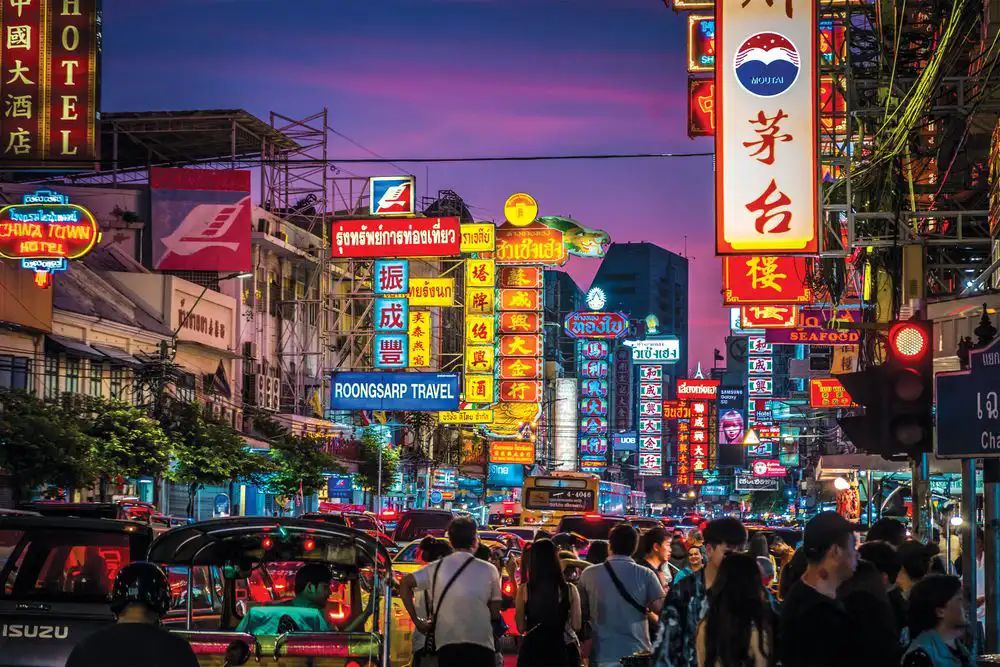
Step out of the quiet Sukhumvit alley after dark and, twenty minutes later, you can be standing under a canopy of neon signs and sizzling woks. That contrast is exactly why Chinatown Bangkok, centred on Yaowarat Road, belongs on any Bangkok itinerary.
It is one of the oldest and largest Chinatowns in the world, and it rewards two very different visits: a slow daytime wander through temples and side streets, and a night-time food crawl once the neon comes on. This guide covers both, along with the practical details for getting there.
Chinatown Bangkok Overview
Chinatown Bangkok sits in the Samphanthawong district, on the western bank of the Chao Phraya River, a short ride from Sukhumvit. The area dates back to 1782, when Bangkok became the capital of the Rattanakosin Kingdom and the city’s Teochew Chinese community settled here, according to the Tourism Authority of Thailand, which also notes it remains the largest Chinese community in the country.
Address: Yaowarat Rd, Khwaeng Chakkrawat, Khet Samphanthawong, Bangkok
Opening hours: There is no single closing time across the area.
- Street Food & Night Market: 17:00 till midnight, daily. Peak times are 19:00 – 22:00
- Shops & Markets: 09:00 – 18:00 daily
- Temples: 08:00 – 17:00 daily
- Bar/Nightlife: 18:00 – 01:00 daily
Yaowarat Road is the district’s main artery and the reason most visitors come at all. Old shophouses with carved wooden shutters stand beside gold shops and newer bars, and the street itself is often called the district’s spine because nearly everything else in Chinatown branches off it.
Getting to Chinatown from Ad Lib Bangkok
The quickest way from Ad Lib Bangkok is the MRT Blue Line to Wat Mangkon Station, which puts you directly on Yaowarat Road.
- MRT Blue Line: Take the Blue Line to Wat Mangkon Station. It is the most direct route and avoids Bangkok’s evening traffic entirely.
- Chao Phraya Express Boat: For a scenic approach, take the express boat to Ratchawong Pier and walk a few minutes inland to Yaowarat Road.
- Taxi or Ride-hailing car: Flexible if you are travelling with luggage or in a group, though evening traffic can slow the ride considerably.
- Distance: Sukhumvit and Yaowarat sit roughly 9 to 15 km apart, though exact travel time depends on traffic and your specific starting point.
If you would rather settle into your room first and head out once the street food stalls are in full swing, book a stay at Ad Lib Bangkok and start your evening from there.
What to eat on Yaowarat Road
Yaowarat Road turns into one long open kitchen after dark, and the food is the main reason most people come.
- Rolled rice noodle soup (guay jub): A peppery Teochew classic, served with pork belly and offal, that locals eat any time of day.
- Oyster omelette and grilled seafood: Once the sun sets, seafood carts line the pavement, frying and grilling to order.
- Dim sum and Chinese bakeries: For a calmer daytime visit, several long-running restaurants and bakeries serve dim sum, egg tarts, and roast duck without the evening crowds.
- A note on timing: Stalls open, close, and move more often than any list can keep up with, so treat vendor names as a starting point rather than a fixed itinerary.
If the crowds and heat catch up with you, cool down with something calmer back at Living Room, Ad Lib Bangkok’s all-day dining space.

Thai Resident Exclusive
Enjoy a relaxing city escape with added dining benefits, exclusively for Thai nationals and expatriates living and working in Thailand.
Beyond the main road: Talad Noi and Song Wat
Yaowarat is only part of the story. A short walk from the main strip, Talad Noi offers a quieter, riverside pocket of Chinatown built around narrow lanes, old machine shops, and street art that changes from year to year. Song Wat Road, running parallel closer to the river, has a different rhythm again: restored shophouses now hold small cafes and design studios, giving the street a slower pace than Yaowarat’s evening rush.
Both areas suit travellers who want Chinatown’s character, its shophouse architecture, its trade in old metalwork and antiques, without the density of the night market. They are easy to combine into one afternoon, since Talad Noi and Song Wat sit within walking distance of Yaowarat and of each other.
Key sights worth slowing down for
Chinatown’s temples and markets are worth building time around, not squeezing into a rushed loop.
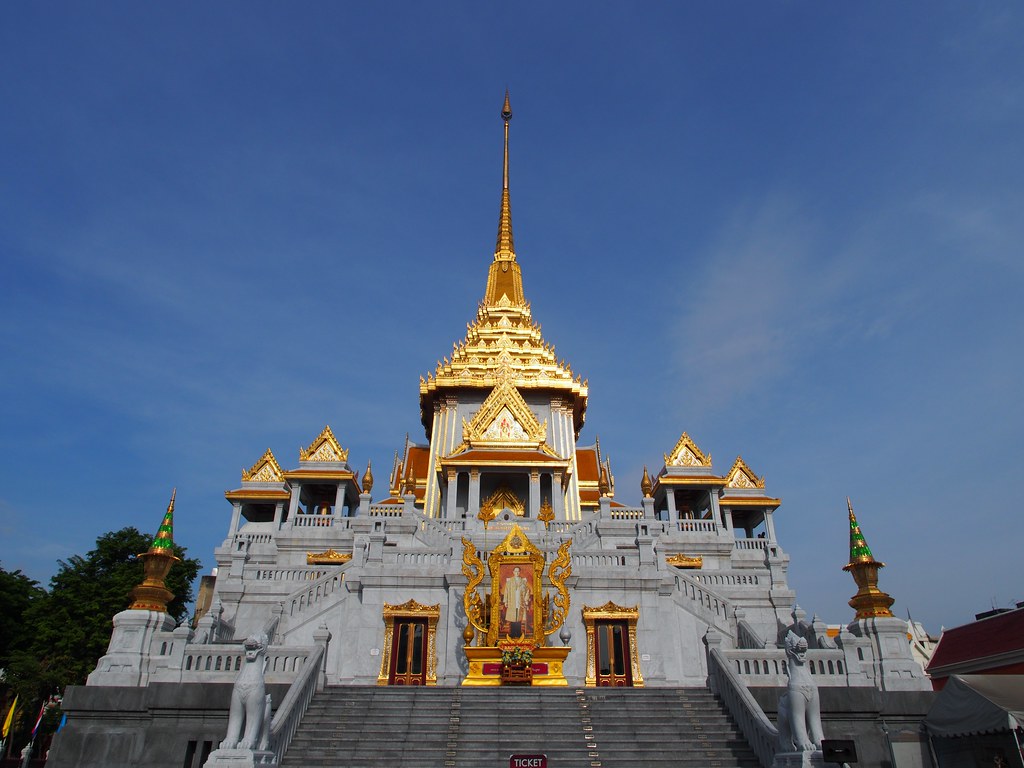
- Wat Traimit houses the world’s largest solid gold Buddha statue, standing 3 metres tall and weighing approximately 5.5 tons.
- Wat Mangkon Kamalawat, the district’s principal Chinese Mahayana temple, draws steady streams of worshippers and is at its most atmospheric in the early morning before the crowds arrive.
- Sampeng Lane, a narrow covered market running parallel to Yaowarat, is better suited to browsing than serious shopping these days, though it still gives a sense of the district’s trading roots.
Best time to visit Chinatown Bangkok
Daytime and evening visits to Chinatown Bangkok serve two different purposes, so the best time depends on what you want to see. Mornings and early afternoons suit temple visits and a wander through Talad Noi’s quieter lanes, when the heat is more manageable and the streets are less crowded.
From around 18:00, Yaowarat Road’s food stalls light up and the street fills with both locals and visitors, making evening the time to come for the classic Chinatown experience. Weekends bring noticeably heavier crowds than weekdays, so a weekday evening is the easier option if you want some room to move.
Conclusion
Chinatown Bangkok works because it holds two moods at once, a calm daytime wander through temples and quiet lanes, and a loud food crawl once evening falls. Both are an easy contrast to the quieter Sukhumvit base at Ad Lib Bangkok, just a short ride away.
Book direct at Ad Lib hotels for the best rate and build a Chinatown evening into your stay. Subject to availability.
Frequently Asked Questions
Is Chinatown Bangkok worth visiting?
Yes. It is one of the oldest and largest Chinatowns in the world, and it offers a genuinely different side of Bangkok from the city’s temples and shopping malls. The combination of historic shophouses, working temples, and a night-time street food scene makes it worth at least half a day, longer if you want to see Talad Noi and Song Wat as well.
What part of Bangkok is Chinatown in?
Chinatown sits in the Samphanthawong district, on the western bank of the Chao Phraya River. Yaowarat Road is its main street and the area’s best-known landmark.
What food should I try in Chinatown Bangkok?
Start with rolled rice noodle soup (guay jub), a Teochew classic, then work through the evening seafood carts for grilled prawns and oyster omelette. Dim sum and Chinese bakeries are better suited to a calmer daytime visit.
What is the difference between Yaowarat and Talad Noi?
Yaowarat Road is Chinatown’s main strip, known for its neon signs, gold shops, and evening food stalls. Talad Noi, a short walk away, is a quieter riverside pocket with narrow lanes, old machine shops, and street art, offering a calmer version of the same neighbourhood’s character.